Developing a critical technical audiovisual performance practice engaging with 'the web' as both medium and subject matter.
Charlotte Roe | MA by Research (Music), University of Huddersfield
Context: The Web
This section details the critical issues my projects engage with, discussions and arguments pertaining to them, and provides explanation of the ways in which my practice responds to them.
I would like to note at this point that I have not chosen to address AI in my work thus far. It should be acknowledged that the mass integration of, specifically, chatbots powered by large language models into browsers, search engines, social media sites, online stores, and software of all kinds has been a major defining feature of the experience of using the web in recent years, with much critical debate surrounding it. I had created most of my pieces while this massive rise in LLM use was still developing, and having done most of my contextual research around other issues (the ones outlined here) I didn’t feel it necessary to rush to include a project or piece about AI. Using the practice I have worked to develop through this research I do hope to tackle the subject in future works.
While informed by an awareness of the critical debate surrounding these issues, my take on them, as expressed in the work, as well as my choices of subject matter are also informed by my own personal, individual, and subjective experiences of the web. This is intentional, my practice is first and foremost an artistic one, and, for me, drawing on my personal experiences is the natural starting point for developing a concept.
I have been active online since my early teens in the early 2000s, and, as such, much of my work reflects on the changes I have personally been witness to between then and now. An idea of a ‘90s web’ also presents itself in my work as a result of my research into net art (see Context: Net Art), in addition to the fact that many aesthetics and styles from that decade were ‘left over’ in many of the first websites I interacted with. I also perhaps hold a hauntological (Fisher, 2012) fascination with that period of web history, it being something I only just missed out on experiencing first hand. My experience of the web is influenced by my age, gender, nationality, my first language, and by countless other traits and life experiences that have, and continue to, affect how I choose to spend my time online.
In those early days I felt a much greater sense of my experience online being a bespoke one, that was highly personal to me. I never had the expectation that any given forum, online game, or website I chose to spend my time on would be used by, or even known to, anyone I knew ‘IRL’. Before the rise in popularity of MySpace I would even guess that the majority of my peers spent barely any time on the web, if at all. Back then, I had more of a sense that spending time on the internet was either something a person was interested in doing or they weren’t. It didn’t permeate every aspect of our lives, through both habit and necessity, like it does today.
Back then, to me, it felt like there was a much greater variety of things to do on the web than there are now. Undeniably there are more websites than ever before, with more content on those websites than ever before (Pratt, 2024), but the actual tangible feeling of being online feels far less novel and expansive than it used to (Lovink, 2019; Sinha, 2026). I don’t discover new websites at anywhere near the rate I used to. Instead, I spend a lot of my time on a handful of social media or entertainment ‘platforms’ with very large user bases and a centralised ‘feed’ of content. For me these are (or have been in previous years) Facebook, Tumblr, Twitter (now X), Instagram, Reddit, and Youtube.
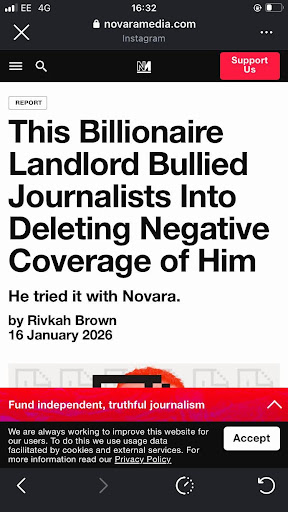
This centralisation of my attention has served to make the web feel smaller and flatter than it once did. The content I consume now has to conform to the format whatever platform it is on demands to earn its place in my ‘feed’, and not only that, it has to be deemed by an algorithm to be capable of capturing my attention to be placed anywhere near the top of that feed. Why? Because these platforms, operated by exceedingly well-resourced tech companies, have one goal: to keep their users on their website or app for as long as possible. User attention is their product, they sell it to advertisers, and so the longer you’re on there the more money they can make. They utilise sophisticated algorithms to serve you what you are statistically most likely to find ‘engaging’ (and the type of engagement doesn’t matter, rage will keep you online just as much as a cute kitten video). And everything comes wrapped in a beautifully designed, polished, self-contained mobile app. This too, serves to keep your attention in one place. You’re no longer jumping from website to website through a browser, multiple tabs open, multiple options listed in a search engine query result, you are inside an application. On Instagram, for example, if you follow a link outside the app, rather than taking you to your default browser, you will stay inside the wrapper of ‘instagram’, ultimately returning to the app no matter how many further links you follow (see figure 6).
How my practice constitutes a response to this
Drawing on the nostalgia I have described I have studied what remnants of the 90s and 2000s web I can find. Looking at the visual language and the types of content to form some sense of what characterises this era, I’ve then considered what of this characterisation can I reference and draw on in my work.
I do not mean to suggest that this era was some kind of ‘golden era’ of the web, without problems. These older, amateur, websites were often full of accessibility issues, broken links and images, and by virtue of being built and maintained by amateurs were liable to being abandoned or going offline without warning. But I do think there are positives to celebrate from this era: a sense of DIY culture, visual diversity, not feeling like you were being sold something, and not having an algorithm deciding what or what not to serve you.